How a Mechanical Metronome Works
The number is beats per minute
A metronome makes a regular pulse. Its number is beats per minute (BPM): at 60 BPM there is one beat each second, and at 120 BPM there are two. Start it, move the slider, and listen to the space between clicks change.
The weight sets the tempo
The brass weight changes how quickly the pendulum swings. Move the weight up for a slower tempo; move it down for a faster tempo. The scale gives the same speed as a BPM number and a familiar tempo word such as Andante or Allegro.
What is moving inside
Wind the key to store energy in a spring. The spring turns a gear train, and the escapement releases it in tiny steps. Those steps keep nudging the pendulum so its swing stays steady instead of simply dying away.
How to use one
Set a speed you can comfortably follow, start the metronome, and let a few clicks pass before you play. Keep listening through mistakes: the next click is a fresh place to meet the beat. Open the side or rear panel to connect the sounds with the moving parts.
Try it
Choose a tempo, then begin the challenge. Hear four count-in beats and tap eight more as evenly as you can. The result shows how closely your taps met the pulse and whether they tended to land early or late.
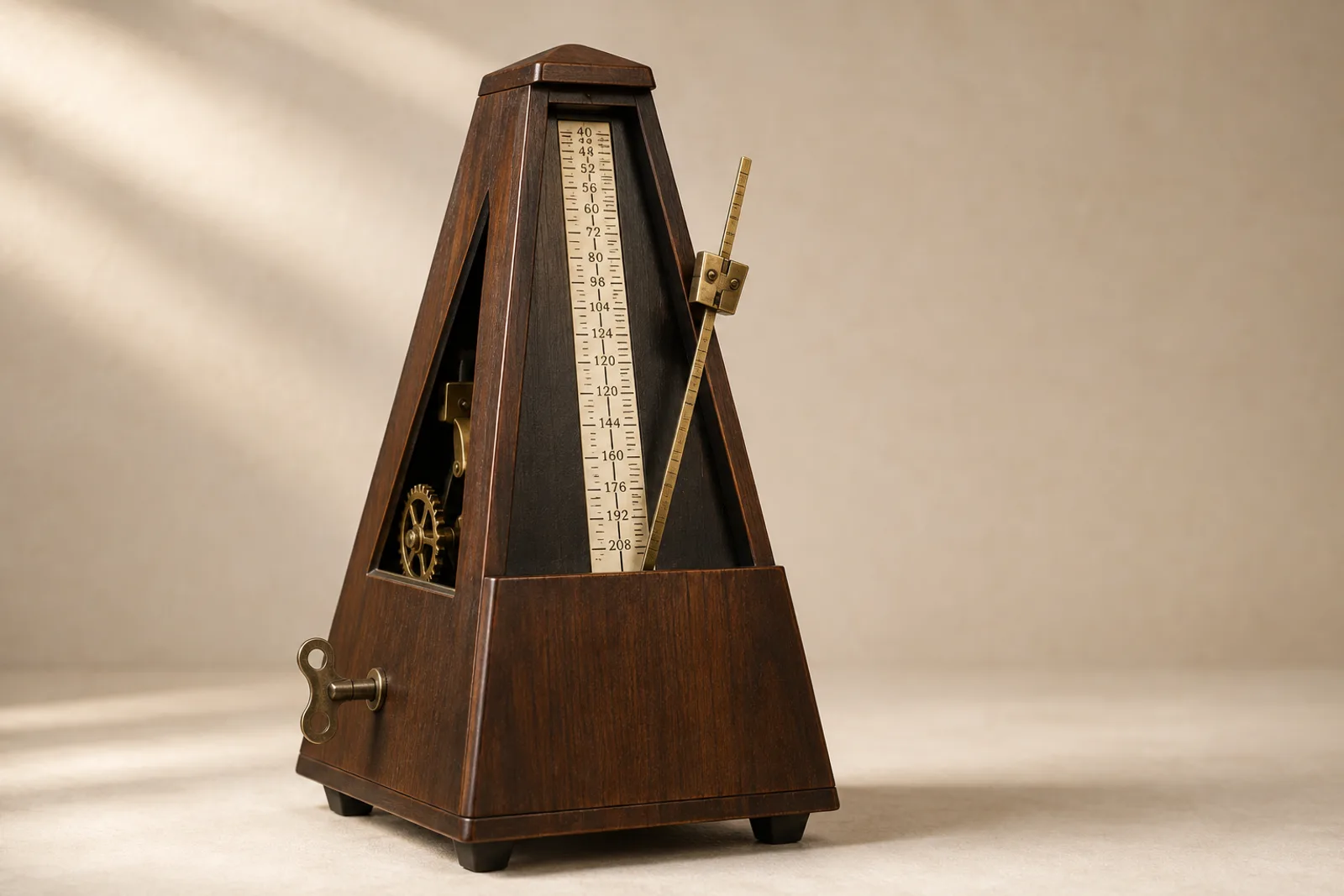
Front view of a mechanical metronome with its pendulum and tempo scale.
Loading the interactive metronome…